A Red Tide Summer
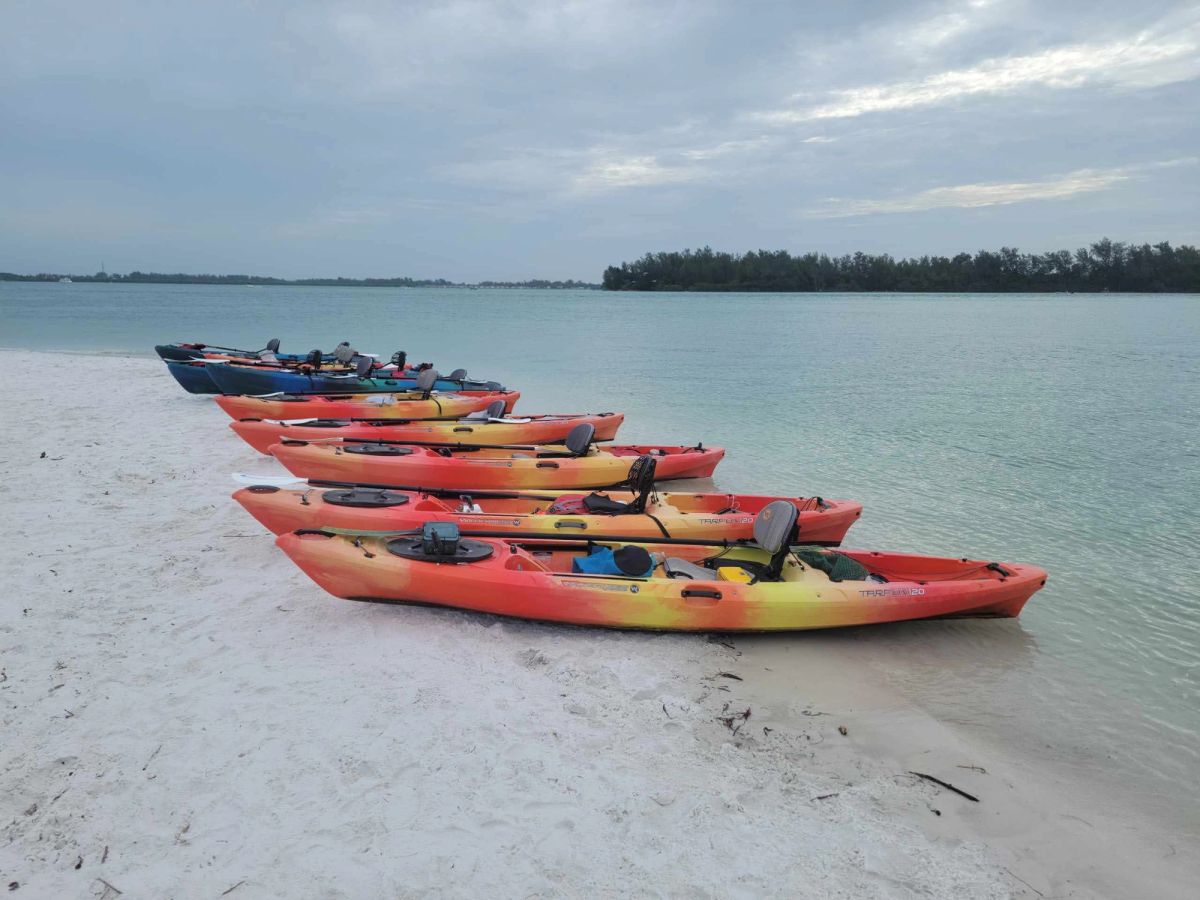
His white Jeep Wrangler swung into the parking lot, coffee nearly splashing out of his ceramic mug with the force of the turn. I watched Kasey slam the rusty door of his car as I pulled up the blinds from the windows, the plastic beads running with each tug. He greeted me as he walked in the door with a nod. Even after a month working there, I was still intimidated by his Costas sunglasses and tall man frame, strong and weathered from hours spent kayaking in the sun. With his long white hair pulled into a ponytail, he fulfilled the old veteran stereotype as he said “Good morning doll.”
My eyes widened the first time I heard the Southern dialect nickname, unused to the warm familiarity that Floridians threw around. He stepped to the back, grabbing granola bars and water, the plastic wrappers wrinkling as they were shoved into his waterproof bag. At the Happy Paddler, there were three kayak tours in the morning. They all covered the same curve of Longboat Key and Anna Maria Island, for tourists or curious locals to fully appreciate the mangroves, sand bars, live shells, and dolphins that most Midwesterners had only seen in documentaries before. They paddled from the canal and into the bay, stopping at a small mangrove forest crowded with pelicans, ibis, cormorants. A menagerie of beaks, bills and bird poop. As they paddled through the brackish water to the bay, Kasey and the other guides, Mike and Alan, taught the tourists about the hidden nursery in its roots, the nutrient rich sand and maze of branches protecting young fish from the predators of the greater sea.
The groups paddled in the warmth of the sun, collecting shells on pristine sand bars like crows collecting trinkets, thrilled by their intent. If they paid attention, and the majority did, they asked the guides questions about the marine ecosystems as they went. They were getting a lesson in the environment, doubling as a picturesque vacation activity. Even if they didn’t know it, the guys did it intentionally, sharing their love for the area that they’d either grown up in, or grew to call home over time.
The shop was in the perfect location, a strip mall with a canal in the back that connected to the upper half of Sarasota Bay, within spitting distance of Jewfish Key and Anna Maria Island. The ideal set up for a local kayak and rental shop, and everyone knew it, as our tours were booked out weeks in advance. Crowds would try to get into a tour the day of with no luck. Even the most hungover college students made it into their plastic seat on the kayak, life jacket buckled and double sided paddle at the ready. The mornings were busy, navigating check ins and life jackets, but ideal in the way that fleeting summer routines are.
The first crowd rolled in for the 8am tour, little kids in their long sleeve swim shirts rubbing sleep out of their eyes as Kasey guided them to the map of the bay that hung out back of the shop. The seashell gravel dug into the bottoms of my Chacos as I stepped out of the shop to follow them, the old metal door slamming behind me. The process was simple: explain the route, grab the gear, and get in the water. Even if an extra hand wasn’t needed, I wanted to get out of the old plastic-mixed-with dust smell of the shop. There wasn’t much that I loved more than the smell of Florida, and I wanted to take it in every chance that I could. The wet air that settled on my skin, tinged by the sting of salt and plants that never died (only molded). It was the first thing I noticed when I stepped out of the tram in the Tampa airport, how the thick fabric of my hoodie and sweatpants immediately stuck to my skin, and the smell of the sea blasted me like a morning wind storm. In Minnesota, the air changed with the seasons, dry heat to wet, cold to cold to wet warmth again. Florida’s smell, it would always be the same, no matter when I was here. It felt like coming to a second home.
I inhaled deeply as I walked down the steps, embracing the heaviness of the air and the sounds of the canal. The spray of the hose leaking, the echo of the aluminum paddles against each other, the quiet trill of a mourning dove nearby. When I started working at the kayak shop, I expected thick paychecks along with hours watching manatee whiskers peek out of the water and picking out the orange underbellies of conchs on sand bars, all backed by the booming tourism industry. It was a quieter area before the pandemic, and the laid back style of the tours catered to the older clientele that had been the regular tourists. What had been “a little slice of old Florida paradise,” as my grandma called it, became spring break central after the COVID-19 shutdown was lifted. Vans full of families swamped the parking lots along the island’s beaches, their brightly colored umbrellas and beach chairs peaking out of the rearview windows. From the morning to the afternoon, it was a race to see who could claim nine by eighteen feet of concrete for the day.
But then, it was only the morning, and the tourists needed to see the bay that they were so eager for. Though I wasn’t a local, Kasey was, and remembered the days when the bay was rich in blue crab and the homes didn’t need to rise past one level. Only the folks with silver hair and sun spots would remember how things were before Florida became home to the happiest place on Earth, Disney World. He would tell me stories of his daughter, how he had her too young and joining the Marines saved him from disappearing into the sun bleached streets of Bradenton, from becoming another Florida man stereotype. The water had always called to him, and I could tell by his tours. He knew each sea creature and could tell you half a dozen stories about it, in the gentle, time-wisened manner that he had. Kasey would take a shell gently in his hand, like a child holding a glass cup, careful not to damage the snail in its home. He’d explain its build from the apex to the suture, the curved, smooth opening that allowed the snail’s foot to move across the sea floor. Then, once everyone had seen the small work of calcium carbonate, he’d lower his hand into the water and let it spin in the current before laying to rest on the sand again.
Kasey worked hard to teach touristy folks about the area that they were squatting in, making the world a little bit better with every mini lesson on mangroves holding carbon in the layers of their roots. Despite never graduating from high school, any question I asked him about the ecosystems of the area was answered with confidence. Kasey would snap a leaf off the branches and pass them around the group, floating in their plastic boats. “This tree holds five times more carbon than any other tree you’ve got up north,” he’d tell the group, gesturing to its network of limbs dipping into the water. He lived, breathed and loved Florida, spending his off days running fishing charters or throwing a line in his backyard.
At the beginning of the tours, Kasey lifted snotty kids into their kayaks and sent them on their way with a gentle pat before sliding into his own kayak and catching up to his group, handily catching up to them in a matter of a few strokes. By then, Alan had arrived along with his group and it was time to send out the 9 o’clock crew, followed by Mike’s group at 10 until the dock’s moors were empty and the shop’s floor was gritty with sand.
Alan grew up in the area, and had been best friends with the owner, Shane, since they were in high school. He had a laid back, upbeat personality that kept the shop running smoothly in the absence of our boss. Despite being close, he didn’t know why Shane disappeared frequently with no explanation, something that everyone else treated as normal so I did too. Some days he’d be there before I opened up, replacing the spray on the hose or scraping barnacles off of the bottom of the kayaks, but most days we didn’t know if he was dead or alive. Mike felt the frustration the most, being used to the tightly run, remote corporate world that he worked in on his afternoons. He’d moved down from Illinois with his girlfriend, his house just across the canal from the shop. Sometimes he’d sit on his dock on his off mornings, a cup of coffee in one hand and petting his labrador with the other, nodding his hello as the tours passed him by.
That was the way the summer started, sunbaked, salty and strong. I listened to Kasey’s stories when he felt like sharing, listened to the other guys tell their conservative conspiracy stories, smiled at customers, tied up the boats and locked up the shop at the end of the day. The shifts always ended in cleaning up the dock with Mike and Alan, spraying it all down with fresh water to combat the degradation of the salt and sharing the Nature Valley granola bars that were normally reserved for tours. It was a good recovery gig for a 17 year old who’d been cooped up in her basement for a year and a half due to COVID. I’d never lived in a place so hot, so humid. Some days I swore that the inside of my lungs looked like the outside of an icy glass of water, all of the perfect little bubbles hanging on the muscles of my diaphragm. The presence of the water hung that thick in the air. My skin grew darker as my hair became lighter, less dirty blond with each day, testing the limits of my Minnesotan, Scandinavian ancestry.
It was the first place I’d felt the kiss of the Gulf of Mexico and picked up real shells with rough edges, not the plastic coated kind at Homegoods. It had history, besides the older lizard-like folks who relied on the sun to keep their blood pumping. Native Americans lived there for thousands of years, building estuaries on the barrier islands and collecting shells, up until the colonizers ruined it. First the Timucans, then the Calousa, and the Tocobagans used the barrier island. The Spanish explorers' red hulls pulled onto the smooth sand bars in the 1530s, their rigging snapping in the wind, spelling the end of an era. Of course, history is rarely new, and their foreign Spanish diseases killed the gentle people who lived off the land. They named it Ana-Kay-Maria after the mother of Christ and her mother, a callback to their home religion like all good ex-conquistadors do. The classy, shorter version of “Anna Maria Key” became official 1894 with the first homesteaders, and developed from there on out.
Even with roads and a post office, they’d still carry shotguns in case of the snakes hiding in the palmetto brush. The island kept its wild roots for years, clinging to them while slowly being developed and changed. A ferry was put in place, then a church, then a bar. The tiny seven by five mile island started to fill up as the wilderness disappeared, appealing more and more to the wealthy inlanders who just wanted a place to get tan. With over 800 permanent residents, the place was booming by the 1940’s, with beer halls for the long nights and beautiful, white hot sand for the sunny days. It was a sort of paradise for the people who lived there in that era, where the tamed wilderness met those seeking a warmer way of life. Then World War II ended and the U.S. Air Force sold off its land used to practice flight maneuvers. The free land sold quickly, the Northerners and developers snapping it up like seagulls diving for leftovers. Quaint pastel condos, lots filled with calico trimmed trailers, and sea cottages dominated the island.
People came and went over the years, the way that the tides roll in and out with the busy seasons bringing snowbirds and spring breakers. Even with the constantly changing community, I didn’t know anyone who stuck around like the Carlins did, who loved Anna Maria as much as them. The couple lived in the unit below where I was staying at my grandparents, a two bedroom condo that smelled like Pine Sol and aging skin, and had kept all of the outdated ’70s decor it was designed with. Palm tree patterned wallpaper, an old pleather Lazy Boy, painters buckets full of shells in the closets. It hadn’t changed much since the family had first moved in nearly 50 years before, an ode to the old Florida that made them fall in love with the state. They were proud Midwesterners until a trip to Sarasota Bay made Dorothy, the wife, decide to ditch blizzards for beaches.With their two oldest children moved out of the house and a Sarasota track coach courting their youngest son, John, the family of three decided that they were ready for a change. They moved into Runaway Bay, the condominium complex in the center of the island. Coral stairs and roofs matched the tropical colored bungalows of the area, while boasting the largest heated swimming pool on the island.
Dorothy always said that John lived the dream life for a kid his age, moving onto the island around the age of 13. After learning how to catch blue crab on the bayside of the island, he sold them to locals and saved up enough money to buy a Jon boat, a little fishing boat perfect to motor around the chain of keys. Dorothy would tell these stories from her patio beneath me, her withered, veiny hand covering her eyes from the sun as she chatted. I longed for the Florida that she told me about, where she fell in love with her family again, every day spent digging up clams for a clam bake, strawberry picking inland, and collecting shells on the beach. She never mentioned Ohio, a transplant that had forgotten she’d lived anywhere except for here. Dorothy always wore a gold chain and charm of a ‘chinese hat’ shell that her husband gave her for their fiftieth anniversary, the jewelry shining in the sun as she talked.
Dorothy would tell me about bringing floats to Siesta Key, an hour drive from the island, to collect sand dollars that she dove for with her family. I remember looking through her buckets of shells, wondering which sand dollar was the last that she’d picked while her son was still home. How she held her breath for each, the water rushing into her ears as she searched the bottom for the smooth circles. I imagined how she’d pick it up off the sandy bottom, pushing off with her toes to the surface and exclaiming to her son about her find.
“My son grew up in that bay,” she’d say, looking off into the distance. After John moved off the island for college and her husband passed away in his 70s, she was left on her dream island without her dream people. I never saw John visit, and wondered if he thought about his sunkissed childhood in the same way that his mother described it. Dorothy talked about her husband like he would walk out of the patio door behind her at any moment, ready to give his two cents on the narrative she created of their lives, but of course, he never did. He’d only been gone for a few years by the time that I met Dorothy and his police badge was still on the license plate of her car. I’d listen from the lanai above her, leaning on the metal frame of the barrier until the lines imprinted on my arms.
I supposed that I was a transplant myself, though not quite as long term as my neighbor below. My grandparents had bought the upstairs condo after years of searching for the perfect spot that reminded them of old Florida, times when my grandma’s parents used to take them down. They were snowbirds themselves, making the twenty four hour drive every fall to escape the winters of Minnesota. I felt a sort of ownership of the island after years of visiting them, but I was still from out-of-state in a similar way that Dorothy and Mike were. The sea called to us all, bringing us to this island that was not ours yet almost felt like it.
As the summer days grew shorter and the weeks passed, the tone of the summer slowly changed. Dorothy kept to herself more, keeping her patio door closed and away from the sun. When she did come out, she’d sigh as she stared at the shoreline and told me it was “just too hot” before returning to her air conditioned home. Her body couldn’t handle the heat like it used to, and with the thermometer ticking higher and higher as July came to a close, I only ever saw her through the window. Kasey and the guys, however, stuck it out like champs. I waited for the tours coming in from the morning trips, standing on the dock and watching the fish dart under it, my heavy steps shocking them into hiding. I watched as the tour would turn into the canal, the rhythmic swish of the water matching the thwap of the paddles. Mike or Alan cruised past them, sweating through their long sleeve swim shirts but protected from the brutal redness that their inexperienced companions sported. The midday heat was the worst, and even though they only caught the beginning of it, nobody was meant to face one hundred degree heat with the glare of the water.
That day, after weeks of following my waiting and “how was the tour?!” routine, it reached a point where I couldn’t ignore it anymore. While pulling the kayaks into the dismount space between docks, my breaths became labored before my lungs rejected the humid, salty air that I cherished so greatly. It was strong that day. I knew it would worsen in the heat of the sun, that by one, my eyes would itch as I locked the kayaks to the dock. By three, I wouldn’t be able to step outside without the stench of the rotting sea turning my coughs into nausea. By the time the sun set, it would settle into the waves again before rising with the sun the next day. But the tourists didn’t know yet that the ocean they were swimming in was dying, and we weren’t going to tell them. A little bit of toxic water wouldn’t hurt them, and we needed the money just as much as they needed those family bonding, Instagram worthy moments.
Kasey and I knew that, and we put them out anyway. Alan and Mike did too, even as people’s eyes reddened while watching the guides explain the map of the bay out back before the tour. Mike had his daughter’s college tuition to pay for, Alan needed to pay off his new Ram truck, I needed money for my own future college tuition and Kasey needed to fund his liquor addiction. It weighed on them more than it did on me, as I didn’t have a real concept of money yet. I was there to escape, to try something new and instead it was becoming the same old, locked in a house again.
The island had faced bouts of red tide before, the algae bloom that fed off of warm and nutrient rich water. And when you’ve got a bay that’s the same temperature as a hot tub and folks who spray their grass with fertilizer like a woman sprays perfume, it was bound to happen. For the locals, it was expected with the summer months. The toxic algae lurked in the ocean year round, but it only bloomed that heavily when provided with the perfect conditions, the very same that happened in the summer of 2021. The beaches were thick with the red tinted toxic water, the surf foaming with the stuff as it pushed the dead fish in and out, onto the sand. Their bodies floated from the ocean and into the canal, tangling in the root mazes of the mangroves until it looked like a bumpy, shiny film was spread over the top of the water. The eyes that hadn’t been picked out by the birds stared blankly towards the sky, their bodies left to rot. No bird would touch a fish that died from poison.
That would become known as the worst case of red tide in years, caused by the waste water released up in Tampa’s Piney Point. It nearly destroyed the kayak shop that was already in debt from the years of the pandemic, though I’ll never know how Shane stayed in business after that. A phosphate processing facility’s discarded waste flowed through the currents down to the Sarasota Bay, feeding the starved algae blooms as it went. We didn’t know that at the time though. All we knew was that we saw more manatees washed up on the beach rather than on the tours and that the stench of dead fish became engrained in our noses. Neither of these were good for a business that relied on a thriving, healthy ecosystem to be beautiful and what kept us working the long hours in the sun. It was what we talked about in the mornings, reading the red tide charts for the day and debating how to explain to customers what was happening.
The first cancellation came in the first week of August, a text I read as Kasey and I waited in the shop for the first tour to arrive, not knowing that they would never arrive. I rolled in the chair up to the desk as he sat on the grimy, salt embedded futon in the back, leaning forward with his hands on his knees and staring at nothing. His paddling gloves scraped along his legs, their worn edges rough, degraded by sweat and salt.
“Cancelled, the tide is too bad, enjoy your day off.” it read, from Shane the owner, who was suddenly forced to be present again.
“Well doll, enjoy your day off,” he told me as he stood and put away his stash of granola bars and stuffed his fingerless gloves into his pocket.. He didn’t seem fazed, though he brushed the driftwood counter before letting the door slam behind him with a jangle of his keys.
It felt like immediately after that when I started my days being blinded by the screen of my phone in the darkness, checking for the red tide concentration in the water, then waiting for the text to see if I’d be able to go into work. Those mornings, I laid in bed and watched the sunrise glow over the concrete tiled roofs across the bay. It felt wrong to see the water and not smell the fish corpses that littered the shores or blink away the sting of the polluted air. I wondered how the sea that had provided full meals for Dorothy’s family could become a mass grave for the blue crab and clams. I hadn’t seen her since the red tide had started, her slatted blinds kept shut to keep out the fumes. I missed her stories and her teal sunglasses, the bifocal line thick like the gems on the side. She retreated into herself like a hermit crab into the shells she picked up on the beach, disappearing from view in a matter of moments in the presence of danger. Above her in my room, I could almost pretend that everything was normal, that I would open my door and everything would be the same as it had been just weeks before.
I wasn’t from here, and I will never be from Florida. That’s not my heritage to claim, nor my right to take. Even in the years later, after moving back and living in Florida for three years and change, it’s not mine. I’m somewhere between a tourist and a local, knowing the secret beach parking spots but not the names of the fish in the bay. Enough to complain about the traffic during spring break season, but not to have to pay for the rising rent rates. Somewhere in the between, that’s where I belong. Enough to enjoy, but not enough to really know it. This state is too expensive, too overrun with tourists and too few generational Floridians for just anyone to take that name. I could walk away, like I did.
How do you explain how a work text chain became a battleground for matched anxieties? It started with our absent boss, Shane’s morning updates to the crew, met with a thumbs up or a “enjoy your day off” text from the guides. But Shane’s number stayed first on my texting list and the messages came nearly every day instead of once a week, things changed. It was hard to remember that we were supposed to be a team when we saw each other once in a blue moon, our shifts plagued by their impermanence and the numbers slowly going down in our bank accounts. The shared jokes on the dock were a memory, rather than a reality, and the lightness that summer brings faded into the heaviness of debt and fear. Kasey rarely spoke, if we were lucky enough that he showed up to work, and the other guys' energy slowed as their tour group numbers dwindled. We couldn’t hide the rot from them anymore.
I don’t remember my last day with them because there was no final goodbye, just “maybe see you tomorrow” and a shrug as they’d wipe the sweat out of their eyes, letting the door bang on their way out. The shop had an eerie sort of ghost feeling after that, the floors clean of dirt and the kayaks floating aimlessly in their ties. Big Costco sized boxes full of granola bars were stored in the closet, slowly growing stale. And I wondered where everyone went, if they’d ever return, if the bay would ever be the same again. Kasey’s quietness eventually manifested into anger, directed at our boss’s attempts to get people back on the water.
“You can’t show them anything, it’s all dead,” he sent to our group.
“But it’s better than nothing,” said Shane.
“How do I giva tour of a gravyardd? Do it yourself. If itss so eesy,” he said.
“Fine, I’ll take out the next tours over at Buttonwood,” texted Shane, referring to the neighborhood down the street known to be a bonnet head shark hot spot. Mike, Alan and I watched them ping pong back and forth, phones dinging every few moments from our respective homes. Their texts became drawn out and Kasey’s grew incoherent, into jumbled and accusatory paragraphs, both of their woes on display for the team to see. I could read the slurring in Kasey’s texts almost as if he was speaking, misspelled and jumbled. Once Kasey called Shane an asshole for disregarding his guide’s health in favor of a check, Mike couldn’t take it anymore.
“Gentleman, this seems to be better suited for a private conversation,” he sent, ending the digital battle. The blame game had ended, and neither party won.
Mike and Alan were quieter in their suffering. I caught it in their sad smiles on the rare days we’d see each other, how their eyes turned down when I asked them how it was out there.
“It was, you know,” they’d say. We left it at that, escaping to the filtered air conditioning of our cars to stop the burning in our eyes. I couldn’t understand it in the same way that they did, resigned to the shop instead of watching the slow degradation of the wildlife. It was why we had all decided to move or stay here, the beating sun, the calls of the birds, and the salty spray of the water. When that’s all been taken away, along with a torn up community, what is left?
I moved back to Minnesota to finish my senior year of high school, with a wish to return. I’d toured a college while living in Anna Maria, only 45 minutes away from the shop that I’d spent the summer in. It weighed on me, the way that Kasey, Shane and the guys had faded away after the damage that the tide had made on the bay. Each had sent their own goodbye text, thanking me for sticking around and wishing me the best in my endeavors. A year later, once I’d committed to the Florida school, they joked that I’d have to come back and work on the weekends, managing the rentals again for them. I never did come back, the drive was too much for the pay, but thought about them every time I drove under the yellow arches of the Sunshine Skyway Bridge to Palmetto.
I saw the guys again, and met with Mike and Alan when I was in the area. We’d meet at the gas station turned diner next door for fish tacos, talk about the mother and baby dolphin they saw on their tours that day or predictions for next season’s hurricanes. The bay came back over time, the summer’s grief flushed out with the winter currents and fresh season of tourists invading. Sand dollars hid under the waves in the spring, string rays sailed over the manatee grass and under the kayaks as they continued their tours. The bodies of the marine life lost that summer lie beneath them, their bones ground down to mix in with the sand, like the carbon laced into the mangrove roots. The tourists returned, of course. Eyes wide to the natural beauty that they’d never seen before, not knowing how the colors in the hibiscus had dampened and the saltwater clouded after the summer of red tide. They would never know what was lost, just that there was more to be gained by them.
Dorothy knew. She knew when she began to carry a trash bag with her shell bag, picking out cigarettes and beer bottle caps from between the crab claws and scallops. Her favorite shells were lost, filtered out by surf rakes to be sold or used in concrete. After years of dining on her son’s catch from her bay backyard, she claimed she’d never eat from it again. Her neighbors were ghosts, unable to afford the ever rising insurance and HOA fees, instead renting their island homes or selling them and moving back up north. On the few weekends visiting my grandparents, I saw her as a ghost through the window, the only sign of life in her yapping dog by the door. I wondered if anything had changed for her after that summer, or if she was used to the rise and fall of the sea’s health like Floridians were.
“It’s the best place on earth,” she would tell me, “I’m trying to die here.” She had a determined way about her that made me believe she would, that she was willing to drain her life savings to stay. Through hurricanes, red tides and rising HOA fees, she stayed. She would sit on her Lazy Boy, watch the fish jump and the dolphins dorsal fins rise above the waves, until she too would eventually become dust to be mixed in with the sand.
We never saw Kasey again. I don’t really know what happened to him, if he returned and our boss continued to use each other as punching bags for their loss or left it there. Alan and Mike found different jobs, the appeal of a real paycheck outweighed the appeal of spending their days guiding folks through the sand bars, secret beer can beaches and mangrove forests that they loved so much. I moved back to Florida, drawn by the endless beach days and sun that drew everyone to the state. Everyone was from somewhere else, and I was shocked whenever I met a real, true Floridian on the campus of my small liberal arts college. The red tide never came back as bad again, though the threat of hurricanes in the fall hung unspoken in the air the same way that the tide did in the summer. Always waiting for the other shoe to drop, for the sea to rise, for the community to be broken again. I had to leave again, unable to afford the rent fees even as a Northerner, but always kept a little space for my love of the Sunshine State. And though those places remained a part of Anna Maria island and Longboat Key’s natural beauty, their stories would not, lost in the memories of those who could not afford to live near them anymore.
Amelie Anna Maria Island · Longboat Key