Underresearched to erased: women's healthcare through birth control
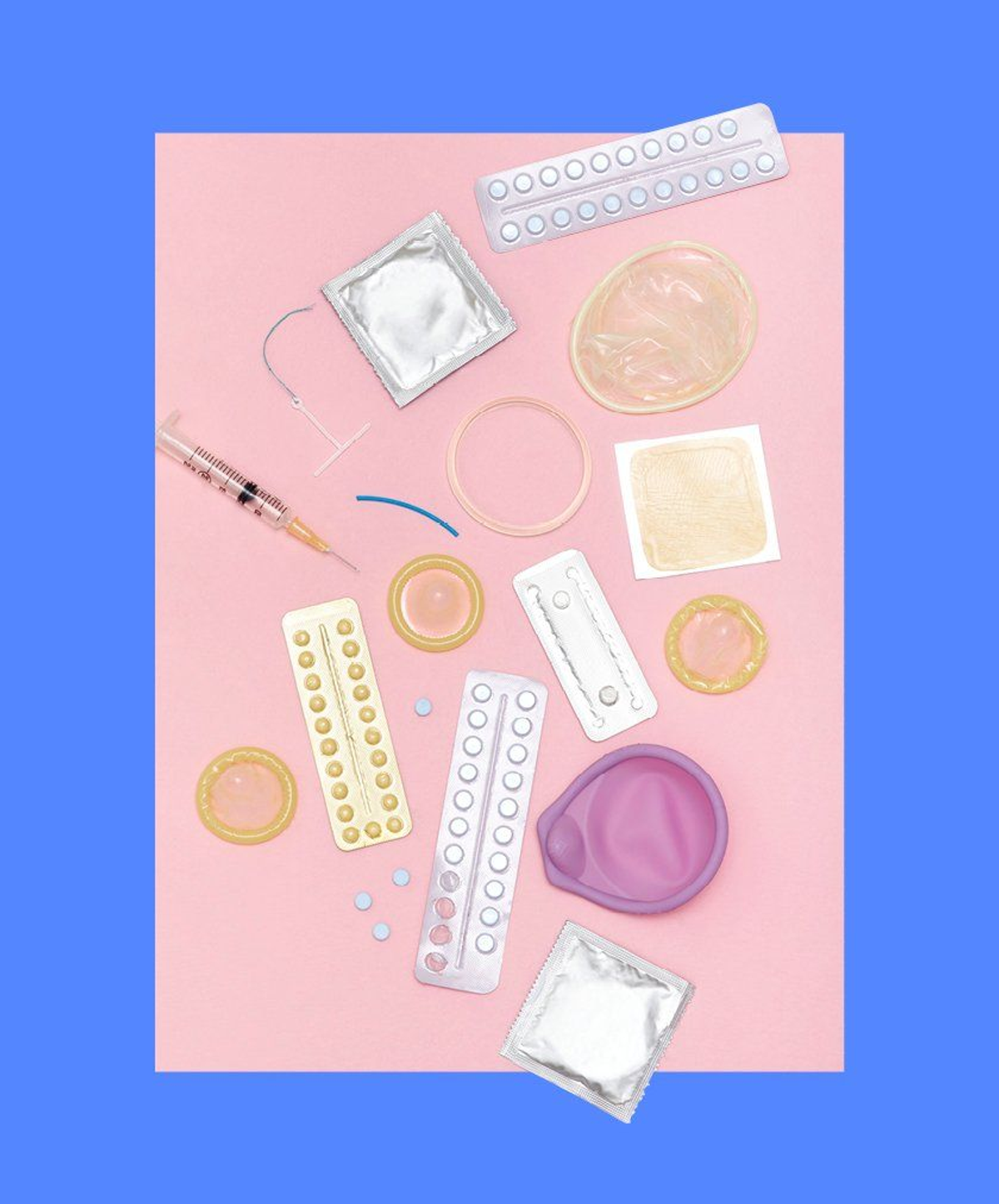
I grew up with a simple idea of a normal menstrual period that comes from sex education: five to seven days of bleeding, with moderate cramping and mood swings. Periods seemed predictable. Natural. Yet, the older I got, this natural thing suddenly seemed like it needed to be tamed. Crippling period cramps, severe acne, migraines and every symptom you can think of were responded to with the suggestion of birth control. Getting birth control became the norm, rather than our periods themselves. The basic idea of a period rapidly became complex, unpredictable and political.
Birth control is central to all women's health care, as it is the answer to a multitude of health issues. Acne, inconsistent periods, endometriosis, polycystic ovarian syndrome (PCOS) and more are often recommended to be regulated by hormonal or non-hormonal birth control. According to USA Facts, roughly 65% of women in the United States from ages 15 to 49 are on some form of birth control, from the IUD, the pill, arm implant or hormonal shots.
Coming from a family with a history of severe menstrual issues, Kylee Forshey, a Margaret B. Riggs Center employee and junior in biology and anthropology, has tried three different kinds of birth control to no avail. After multiple failed attempts at treatment and a misdiagnosis of endometriosis, her gynecologist gave up on her. Now, her periods often begin with one to two days of excruciating pain that can leave her curled up on the floor in agony.
"I hate how a lot of doctors have not been listening to women and not actually listening to their issues, and just throwing birth control at them," Forshey said. While birth control is the answer for many women, it doesn't work for every issue. Women's health is more complex than the simple answers that they've been given, and while contraceptives are important, they should be more of a jumping off point.
According to the World Health Organization, PCOS affects 6% to 13% of reproductive age women, but it is suspected that up to 70% of affected women are undiagnosed. A chronic condition that has no cure, PCOS can cause irregular periods, abnormal facial or body hair, painful periods and acne. The only method of treatment is birth control, and if left untreated, women are more likely to develop cervical cancer.
Endometriosis is a condition where the inner lining of the uterus grows outside of it, often causing excruciating period cramps, heavy bleeding and infertility. Similar to PCOS, the uterus can develop cysts on the ovaries over time. For both PCOS and endometriosis, an early diagnosis is essential to reduce long term complications and prevent symptoms as much as possible.
"It's for me," said Ava Hemann, a sophomore in environmental studies and marine science and co-vice president of Gen-Action at Eckerd College. For her, birth control was entirely about managing her PCOS. Her irregular periods weren't an immediate sign of PCOS, but when test results came back, her estrogen and testosterone levels were double what they should be, so she was diagnosed.
Many doctors are told to look for obesity as a red flag for PCOS, which often leads to underdiagnoses in thinner women. Hemann's irregular periods were dismissed as simply taking a while for her body to regulate, a mishap that was corrected years later.
"They told me that I was working out too much, but I wasn't marathon training, so it shouldn't have had an effect," said Hemann. The dots weren't connecting, as she led a healthy and appropriately active life.
"I knew I was coming to Florida, and I didn't know where everything was going to go," said Hemann, of her choice of birth control and the current political administration. After two years on her hormonal IUD, she hasn't had a period and doesn't worry about it. Yet, the thought of being without her IUD and her PCOS symptoms progressing is scary.
Eden Smith, a junior in anthropology, has been on the birth control pill since being diagnosed with PCOS last winter. With symptoms of acne, irregular periods and excess hair growth, it wasn't obvious what she had until her mentor noticed and recommended she see a gynecologist. After testing for low levels of estrogen and high levels of testosterone, she was diagnosed with PCOS.
"It's really picking the lesser of evils," said Smith, talking about her switch from Nexplanon, an implant in the arm, to the pill after her diagnosis.
Maddie Johnson, a senior in political science at the College of Charleston, is all too familiar with this choice. The two women shared their stories over Starbucks cups thick with condensation, as Johnson was visiting Smith for the weekend. From negative experiences with health services to debilitating cramps, she's gone through the ringer with women's healthcare. The worst being the Pfizer-developed birth control shot.
The Depo shot, a tri-monthly shot of progesterone to prevent pregnancy, is currently under scrutiny in a lawsuit for causing brain tumors in over 1,000 women, according to the New York Post. Johnson received one dose of the shot before the logistics of planning her healthcare between school and home became too difficult.
"It's hard to know what is normal — like, does the fact that I was on chemo for three years affect my periods?" said Johnson. A survivor of childhood cancer, Johnson had leukemia from ages three to six. Despite not remembering her years with cancer, it's a key factor for her to consider with health concerns.
"They don't know the long-term side effects because my generation is the first that didn't die," said Johnson. Besides going through menopause early, there is virtually no research on how chemo affects women's reproductive systems. Though Johnson doesn't have PCOS, the factor of her childhood cancer remains a huge unknown in her reproductive health.
The two women expressed concern that with Roe v. Wade falling, other controversial cases would be overturned, like same-sex marriage and equal access to reproductive regulation resources.
"Previously, we've had a culture where women's health is being neglected, and now it's just being fully erased."
— Eden Smith
The bigger picture
Today, birth control is on the chopping block as family planning is under attack from the Trump administration. Family planning healthcare — IVF, birth control and abortion — is being targeted as the administration threatens to take away women's choice in their healthcare. Factors like decreasing funding in federal healthcare contribute to inaccessibility of birth control, a particularly relevant issue with the weeks-long government shutdown this fall. The shutdown threatens mass layoffs for federal workers, with already underfunded women's healthcare clinics now barely able to keep their doors open.
Birth control is more than just preventing pregnancy — it is the core of women's health. In an area where 50% of the population's health has been ignored, it is the only answer that most women have for their menstrual health concerns. The removal of this cornerstone in women's healthcare would be detrimental to anyone who relies on it for managing hormones, preventing serious cramping and the countless other issues women use it for. Birth control is the core of women's right to their bodily autonomy, and to remove it would be a near death sentence for many women.
Published in Cat. 5 · Triton Publications · Fall 2025